
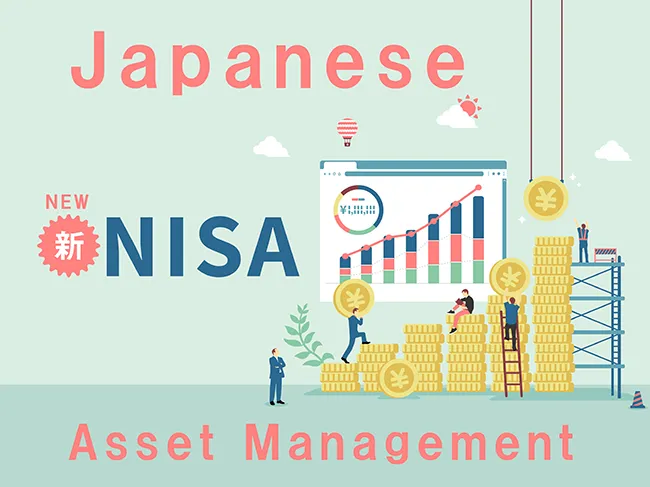
Living in Japan often means navigating systems that were originally designed for Japanese nationals. Investing is no exception. One of the most commonly discussed systems today is New NISA, Japan’s tax-advantaged investment framework. Many foreign residents hear about it through colleagues, social media, or banks, but are left unsure whether it really applies to them, how it works in practice, or whether it is worth the effort.
This guide is written for foreign residents living in Japan. It explains what the New NISA is, how it works, who it is suitable for, and how to get started, with a focus on the practical circumstances of non-Japanese residents.
What New NISA Is
New NISA is Japan’s tax-free investment account system for individuals. Under normal Japanese tax rules, profits from investments — such as dividends from funds or capital gains from selling stocks — are taxed at roughly 20 percent. New NISA allows eligible residents to invest through a designated account and legally avoid this tax on qualifying investments.
It is important to understand that New NISA is not an investment product. It is not a fund, a stock, or a savings account with guaranteed returns. Instead, it is a tax status applied to investments held inside a specific account at a Japanese financial institution. The investments themselves still rise and fall in value according to the market.
The system officially began in January 2024 and is designed to be permanent, rather than limited to a fixed number of years. Its main purpose is to encourage people living in Japan to invest for the long term in a country where bank savings accounts offer extremely low interest and cash alone rarely grows in real value.
The Basic Structure of New NISA

New NISA consists of two investment frameworks, both of which can be used within the same account. You do not need to choose only one.
What defines the system are three key ideas:
- Investment profits inside the account are tax-free in Japan
- Assets can be held indefinitely with no expiration
- There is a lifetime cap on how much can be invested tax-free, but selling assets restores future capacity
These features make New NISA suitable for long-term planning rather than short-term trading.
Tsumitate Investment Quota (Long-Term Accumulation)

The tsumitate investment quota is designed for steady, long-term accumulation. Investments under this framework must be made into approved investment trusts that meet strict standards set by regulators. These standards focus on diversification, cost control, and suitability for long-term holding.
Most people use this quota through monthly automatic investments. For example, instead of investing a large amount at once, you might invest a fixed amount every month. This approach spreads risk over time and reduces the pressure of trying to time the market.
Key characteristics of the tsumitate quota include:
- Annual investment limit of 1.2 million yen
- Investments limited to approved long-term funds
- No individual stocks or speculative products
- Strong focus on consistency and discipline
This quota is especially suitable for people who are new to investing, busy professionals who do not want to actively manage portfolios, or residents who prefer a low-stress approach.
Growth Investment Quota

The growth investment quota provides much more flexibility. It allows investments in individual stocks, exchange-traded funds (ETFs), real estate investment trusts (REITs), and a wider range of mutual funds.
Under this framework, investors can take a more active role in choosing assets. Depending on the broker, this may include Japanese stocks, foreign-linked ETFs, or sector-specific funds.
Key characteristics of the growth quota include:
- Annual investment limit of 2.4 million yen
- Broader range of eligible investment products
- Suitable for investors who want more control
- Higher responsibility for managing risk
When combined with the tsumitate quota, the total annual investment limit under New NISA is 3.6 million yen.
Lifetime Investment Limit and Flexibility
New NISA has a lifetime tax-free investment limit of 18 million yen. Within this total, up to 12 million yen can be allocated to the growth investment quota.
What makes this system flexible is how selling works. If you invest part of your lifetime allowance and later sell those assets, the amount sold becomes available again for future investment. This allows for portfolio adjustments over time without permanently losing tax-free capacity.
This feature is particularly useful for long-term residents whose financial situations change due to career progression, family needs, or relocation within Japan.
Who Can Use New NISA as a Foreign Resident

Nationality does not matter. New NISA is available to foreign nationals who are legally resident in Japan.
To open a New NISA account, you generally need:
- Legal residence status in Japan
- A valid residence card
- A My Number
- To be 18 years or older
- A Japanese securities account
The system is designed for residents, not tourists or short-term visitors. If you permanently leave Japan and lose tax residency, you are typically required to close your NISA account, which often involves selling the assets held within it.
For foreign residents planning to stay only a short time, this point alone may influence whether New NISA is appropriate.
Tax Considerations for Foreign Residents
New NISA removes Japanese capital gains and dividend tax inside the account, but it does not override tax obligations in other countries.
This is especially relevant for residents from countries that tax worldwide income. In some cases, income earned inside a Japanese tax-free account may still need to be reported abroad, even if Japan does not tax it.
For this reason, New NISA should be viewed as a Japanese tax benefit, not a universal one. Understanding how your home country treats foreign investment accounts is essential before committing large amounts.
Advantages of New NISA

The most obvious advantage is tax efficiency. Over long periods, avoiding capital gains tax can significantly increase net returns.
Other benefits include:
- Unlimited holding period, removing pressure to sell
- Clear annual limits that encourage disciplined investing
- Flexibility to combine passive and active strategies
- Compatibility with long-term life planning in Japan
For many residents, New NISA is one of the few realistic ways to grow assets locally without complex structures.
Disadvantages and Limitations

New NISA does not eliminate investment risk. Market fluctuations can reduce the value of investments, sometimes significantly.
Other limitations include:
- Language barriers at many Japanese securities firms
- Restrictions when leaving Japan permanently
- No ability to offset losses against taxable income
- Administrative complexity for some foreign residents
These factors do not make New NISA unsuitable, but they do require careful consideration.
Who Should Consider Using New NISA

New NISA tends to work well for foreign residents who:
- Expect to live in Japan for several years or longer
- Earn income in Japan
- Want to invest gradually rather than speculate
- Are comfortable with long-term market risk
It may be less suitable for those with very short stays planned, complex overseas tax situations, or a preference for managing all investments outside Japan.
How to Start New NISA (Practical Steps)

The first step is obtaining a My Number, which is mandatory. Once you have it, you choose a brokerage that offers New NISA accounts.
After opening a standard securities account, you apply for the NISA designation. Approval can take several weeks.
Once the account is active, you decide how to allocate funds between the tsumitate and growth quotas. Many foreign residents start with tsumitate investments and gradually add growth investments as they gain confidence.
Learn more about My Number here
Recommended Securities Firms for Foreign Residents


Several brokers are commonly used by foreign residents:
- SBI Securities: Very large selection and low fees
- Rakuten Securities: User-friendly and popular among beginners
- Monex: Strong analytical tools and stable platform
- Interactive Brokers Japan: English interface and international reach
Each has advantages and trade-offs, particularly regarding language support and product range.
Tsumitate vs Growth Investment Quotas
| Category | Tsumitate Investment Quota | Growth Investment Quota |
|---|---|---|
| Main Purpose | Long-term, steady accumulation | Flexible growth-oriented investing |
| Annual Limit | 1.2 million yen | 2.4 million yen |
| Eligible Assets | Approved investment trusts only | Stocks, ETFs, REITs, wider fund range |
| Risk Level | Generally lower | Varies, potentially higher |
| Best For | Beginners, passive investors | Experienced or active investors |
While these two quotas serve different investment purposes, they are not mutually exclusive.
Under the New NISA system, investors can use both the Tsumitate Investment Quota and the Growth Investment Quota at the same time, allowing for a balanced strategy that combines long-term, steady investing with more flexible growth-oriented investments.
Common Questions (Q&A)

Can I change or stop monthly investments?
Yes. Most brokers allow you to adjust or pause tsumitate investments easily.
Are losses deductible?
No. Since gains are tax-free, losses cannot be used to reduce taxes elsewhere in Japan.
Can I invest only a small amount?
Yes. Many funds allow relatively low monthly investments, making the system accessible.
Summary

New NISA is a practical, long-term investment system designed for people living in Japan, including foreign residents. It offers meaningful tax advantages, flexibility, and a clear structure that supports steady asset building rather than speculation.
For foreign residents who plan to stay in Japan and are willing to engage with the system carefully, New NISA can play an important role in long-term financial planning. At the same time, it requires realistic expectations, an understanding of residency rules, and awareness of international tax obligations.
Used thoughtfully, New NISA is neither complicated nor risky by design — it is simply a tool. Whether it is the right tool depends on how long you expect to live in Japan, how you prefer to invest, and how comfortable you are managing finances across borders.
Thank you for reading.
If you’re looking for tours, experiences, or tickets in Japan, you can explore them here.