

When you’re building a life in Japan, it’s only natural to question whether paying into the pension system is really necessary. After all, the rules can feel a bit confusing—especially if you didn’t grow up with them. But if you’re living in Japan as a foreigner, the public pension system is very relevant to you. Here’s a thorough, English-friendly guide to how the Japanese pension system works for foreigners living in Japan — what’s required, what you get, and what to consider depending on how long you stay.
Why you might care about Japanese pension
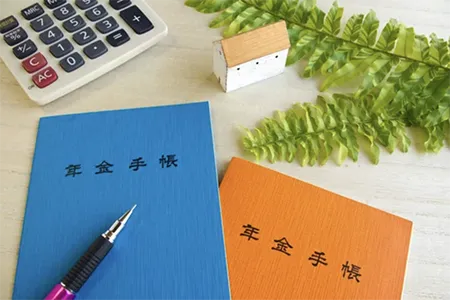
When you first arrived in Japan, you might’ve thought: “I’m not Japanese, so pension doesn’t apply to me.” That’s a natural assumption — but it’s not how things work. If you live in Japan and have the applicable visa/status, pension participation isn’t optional; it’s built into the social insurance system you become part of when you settle here.
Here’s how the system works — and what it means for you as a foreigner.
How Japan’s public pension system works
Japan’s public pension is broadly composed of two (well, three historically) systems — depending on your age, work status, and employer.
What are the types
- Basic pension (National Pension / Kokumin Nenkin): This is the “foundation” pension. If you live in Japan and are aged 20–60, and you are not covered under another pension scheme (see below), you join this.
- Employee pension (Employees’ Pension Insurance / Kōsei Nenkin): If you work for a company or are employed under a scheme where pension is provided by employer, you typically join this — and it replaces the need to separately pay into the basic pension.
- (There used to be a “mutual pension” for public servants etc., but for most people today the main two are National Pension or Employees’ Pension.)
Who pays what
- If you are self-employed, a student, unemployed, or otherwise not working at a pension-covered company: you become a “first-class insured” under the National Pension. You need to pay the pension premiums yourself.
- If you are employed by a company that enrolls in the Employees’ Pension Insurance: the company handles your pension — contributions are deducted from your salary (and the employer pays half). In that case, you do not need to separately pay for National Pension.
- If you are a spouse (stay-at-home partner) of someone who is covered by Employees’ Pension Insurance: under the “third category” (third insured), you may not need to pay premiums — but you will still be covered by pension insurance. This applies even if you are a foreigner.
Are foreigners required to pay pension in Japan?

Yes — if you live in Japan and meet the age and residency conditions, pension payment is generally mandatory for foreign residents just as it is for Japanese citizens.
More precisely:
- If you are aged 20–60 and live in Japan (with a visa/status that means you are a resident), you are required to be part of the National Pension system, unless you are covered under Employees’ Pension Insurance by working for a company, or fall under the “spouse/ dependent” third-category exemption.
- If you do not pay — i.e. skip the pension contributions — the consequences are similar to those for Japanese residents: you may receive reminders, overdue notices; in extreme cases where you persistently don’t pay and your income is high enough, there could be legal enforcement such as asset seizure or forced collection.
So, being a foreigner does not exempt you automatically.
How to pay: process for foreigners

If you need to pay (e.g. self-employed, student, unemployed, etc.), here’s roughly what you need to do.
- After you register your residence (i.e. when you get a resident registration, and are aged 20–60), the local municipal office will handle the registration for National Pension (or you may need to apply — depends on municipality).
- You will receive pension premium payment slips (“納付書 / nōfushō”) periodically (often every few months). Payment methods typically include bank transfer, automatic account transfer, convenience store payment, etc.
- If you work for a company and are under Employees’ Pension Insurance, you just need to give your employer the required documents (e.g. residence card, MyNumber, etc.); pension contributions are then deducted automatically from your salary, so you don’t have to pay separately.
Benefits: What you get if you pay

- Once you have paid into National Pension (or Employees’ Pension) for the required period (see below), you become eligible for old-age pension starting at age 65 (subject to future pension age reforms).
- There are also other benefits: e.g. disability pension (if you become disabled, under certain conditions), survivors’ pension (if you die, your eligible dependents might get survivors’ benefits) — similar to Japanese residents.
For foreigners: you’re treated the same as Japanese — you can receive pension payments if you meet eligibility, regardless of nationality.
When being a foreigner makes things more complicated

There are a few wrinkles for foreigners — depending on how long you plan to stay, your home country’s pension system, and whether there’s a social security agreement between Japan and your home country.
- If your home country has a social security agreement with Japan, you may avoid double-payment or use a combined contribution period to qualify for pension in either country.
- If you are likely to return home before qualifying for a Japanese pension (e.g. before you have contributed for the minimum period), there is a mechanism for “lump-sum withdrawal payment” (脱退一時金 / dattai ichijikin) under certain conditions — but this comes with drawbacks (see below).
- If you are a short-term visitor or on a short-stay visa (e.g. tourist), pension doesn’t apply — because the pension requirement is for residents.
Key requirements for receiving pension
To receive pension payments (old-age pension) from National Pension (or via Employees’ Pension), you need:
- Contribution (or eligible non-payment periods like certain exemptions) for at least 10 years (120 months) (this threshold was lowered from 25 years in the past).
- Reach pensionable age (currently 65, though Japan may revise retirement age in the future)
- If you leave Japan and return to your home country, and you do not intend to claim pension in Japan — there is the lump-sum withdrawal payment option (脱退一時金), under certain conditions (non-Japanese nationality, no residence in Japan, no pension benefits received, contributed at least 6 months)
So, should you (a foreigner in Japan) pay pension? — Pros & Cons

| ✅ Reasons to pay / stay in pension | ❓ When you might skip / consider withdrawal |
|---|---|
| You plan to stay long-term in Japan (or return again later) → you accumulate pension entitlement over time | You only stay for a few years or decades, and then return home — you might use lump-sum withdrawal or rely on home country pension |
| You want access to old-age pension, disability pension, survivors’ pension (safety net if something happens) | Your home country’s social welfare is stronger / you prefer to rely on home country retirement scheme (if allowed) |
| You might apply for permanent residency or naturalization someday — having paid pension continuously helps | Paying pension seems “wasted” if you never claim benefit and your stay is temporary |
| For employed people: contributions are automatic and partly covered by employer — low hassle | For freelancers / self-employed: you must pay monthly — may feel costly, especially if you leave soon |
Additional considerations for foreigners
- If your home country has a social security / pension agreement with Japan, you may be able to combine contribution periods (avoid double payment) and make pension more worthwhile.
- If you foresee returning to your country before you hit the 10-year contribution threshold, and don’t plan to come back — you might consider requesting the lump-sum withdrawal payment (though note: that nullifies your Japanese pension contribution record).
- If you stay longer and want to qualify for permanent residence or naturalization (or some visas), being up to date with pension contributions often becomes important.
Frequently Asked Questions (Q&A)

Q1: “I’m a foreigner working at a Japanese company — do I need to pay National Pension myself?”
A: No. If your employer enrolls you in Employees’ Pension Insurance (common for full-time employees), then you don’t separately pay into National Pension. Pension contributions are automatically deducted from your salary (half by employer, half by you).
Q2: “I’m a student or freelancer. Do I still need to pay pension?”
A: Yes — if you are 20–60 years old and living in Japan, you are required to join the National Pension and pay premiums (unless you qualify for a special exemption).
Q3: “I plan to leave Japan after a few years. Is it pointless to pay pension?”
A: Not necessarily. There are two paths:
- You keep paying, hoping to return later and continue contributing toward filling the 10-year requirement.
- Or, if you don’t plan to return, you may apply for the lump-sum withdrawal payment (脱退一時金) — but that means forfeiting pension entitlement, and contributions made are (effectively) refunded partially.
Q4: “My home country has a pension system too. If I pay in Japan, won’t that be double paying?”
A: Possibly — but if your home country has a social security agreement with Japan, you might avoid double payment or combine contribution periods. That makes the Japanese pension more useful.
Q5: “What happens if I skip payments?”
A: As with Japanese citizens, you may receive reminders or debt collection notices. Persistent non-payment with a certain income level may lead to forced collection or asset seizure. Further, failing to pay may hurt long-term plans like permanent residence or naturalization, as pension compliance is often checked.
Some realistic scenarios: example cases
Example 1 — Working full-time in Japan long-term:
Maria (from the Philippines) works full-time at a Tokyo company. Her employer enrolls her in Employees’ Pension Insurance. She doesn’t need to pay separately. Over decades, she builds up pension entitlement so that at 65 she will receive pension — potentially a helpful safety net if she stays in Japan or returns.
Example 2 — Freelancer / self-employed / part-time, stays for a few years only:
John (from Canada) moves to Osaka for 3 years, working as a freelance engineer, then returns home. He registers for National Pension and pays for 36 months. When he leaves, he applies for “lump-sum withdrawal payment.” He gets some of his contributions refunded — but gets no pension benefits (since he didn’t contribute for 10 years).
Example 3 — Student or spouse on dependent visa:
Lina (from Ukraine) is a student in Japan, aged 22. She signs up under National Pension. If paying every month may be tough, she may apply for exemption or deferral (depending on rules). Alternatively, if her spouse later finds a job covered by Employees’ Pension Insurance, Lina might become a “third-category” insured and not have to pay at all — yet still retain pension qualification.
What this means if you decide

If you plan to build a long-term base in Japan — staying for many years, maybe getting permanent residency or naturalization — paying into the pension system is often a smart move. It gives you access to old-age pension, and demonstrates compliance with social systems (useful for official processes).
If you are on a shorter stay — a few years, then returning — pension becomes less obviously beneficial; the lump-sum withdrawal payment offers a partial refund, but you lose long-term entitlement. In that case, you’ll need to weigh costs vs benefit carefully.
Also, if your home country has a social security agreement with Japan, that may tip the balance toward contributing (since you may avoid double-payment or gain combined benefit eligibility).
Final thoughts

The Japanese pension system is universal: the rules apply to all residents, including foreign nationals. Whether it’s “worth it” to pay really depends on you — your length of stay, life plans, home country pension arrangements, and how much you value having a stable safety net in old age.
If you live in Japan and can afford it, contributing can be seen as a form of social insurance for potential risks: aging, disability, return to Japan, or even just having a fallback when you retire. On the other hand — if you know you’ll return home and have another pension plan — it might feel like paying on something you’ll never use.
Personally, if I were living in Japan long-term, I would treat it as a “safety-first” investment.
Thank you for reading.
Experience the Best of Japanese Cuisine