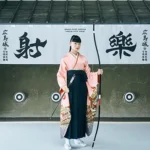
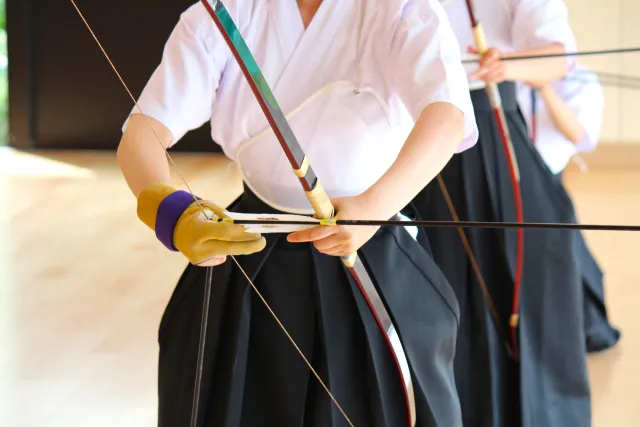
Before stepping into a kyūdō training hall, you immediately sense that this is more than archery. The quiet atmosphere, deliberate movements, and unwavering focus make it clear that kyūdō is an art of both body and mind—an ancient practice that continues to thrive across modern Japan.
What Is Kyūdō?
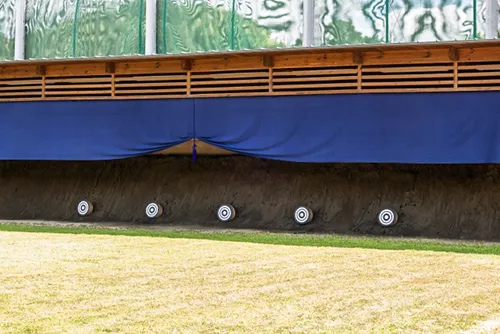
Kyūdō (弓道) literally means “the Way of the Bow.” It is the modern form of traditional Japanese archery, developed from centuries of warfare, ceremony, and martial discipline. While bows were once tools for hunting and battle, today kyūdō is practiced as a path of self-cultivation, emphasizing precision, etiquette, and inner calm.
Practitioners aim not only to hit the target but to express correct form, posture, and spirit through each movement. Kyūdō is often described as a moving meditation—an art that reveals one’s mental state with every shot.
Origins and Historical Development
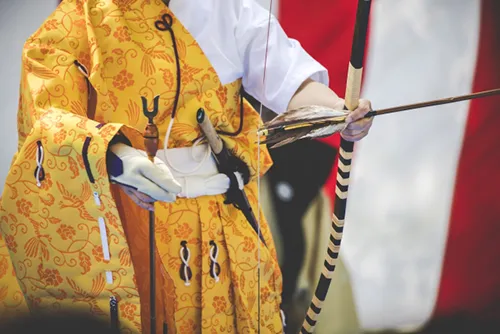
Kyūdō has its roots in prehistoric Japan, where early bows appeared thousands of years ago. By the Heian period (794–1185), the bow gained symbolic and ceremonial importance, used by nobles in formal rituals. During the Kamakura and Muromachi periods, samurai honed archery for warfare, giving rise to powerful schools that refined technique and strategy.
The arrival of firearms in the 16th century gradually reduced the bow’s military role. However, archery survived as a ceremonial and martial art, evolving into a disciplined practice centered on personal development. After World War II, kyūdō was revived as a modern budō, with standardized guidelines ensuring safety, consistency, and accessibility for people of all backgrounds.
Today, kyūdō is practiced in schools, universities, and dedicated dōjō across Japan and around the world.
Kyūdō Techniques and the Eight Stages
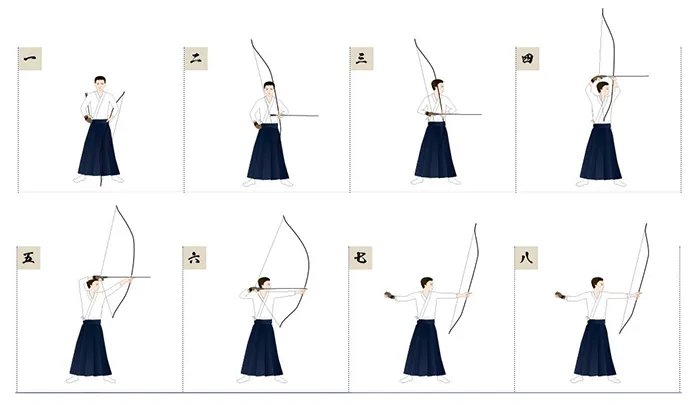
Kyūdō is defined by the hassetsu, or “Eight Stages of Shooting.” These steps break down the process of drawing and releasing the bow into clear, focused movements.
1. Ashibumi — Setting the Stance
The archer stands with feet shoulder-width apart, forming a stable base aimed toward the target line.
2. Dōzukuri — Establishing the Body Posture
The body is aligned vertically, centered, and relaxed to prepare for the shot.
3. Yugamae — Readying the Bow
Gripping the bow and arrow correctly is essential for control and balance.
4. Uchiokoshi — Raising the Bow
The bow is lifted in a smooth motion, symbolizing the beginning of intention.
5. Hikiwake — Drawing the Bow Apart
The arms extend outward, creating a wide and graceful opening.
6. Kai — Full Draw
The archer reaches the moment of complete tension, both physical and mental.
7. Hanare — Release
The release should be natural and effortless, happening as a result of proper form.
8. Zanshin — Remaining Spirit
The posture and mind after the shot reveal the archer’s true composure.
These movements emphasize grace, awareness, and precision—concepts that define kyūdō as a holistic discipline.
Rules and Etiquette
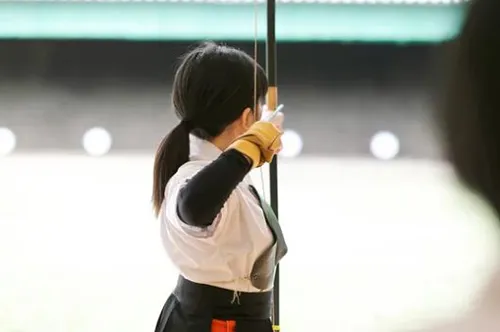
Kyūdō follows strict guidelines designed to maintain safety, order, and dignity.
- Practitioners enter and exit the shooting area with formal bows.
- Conversations are minimal; silence supports concentration.
- Arrows are retrieved only after all shooters complete their rounds.
- Beginners learn etiquette before touching a bow.
Respect, patience, and mindfulness are core components of good practice.
Kyūdō Equipment
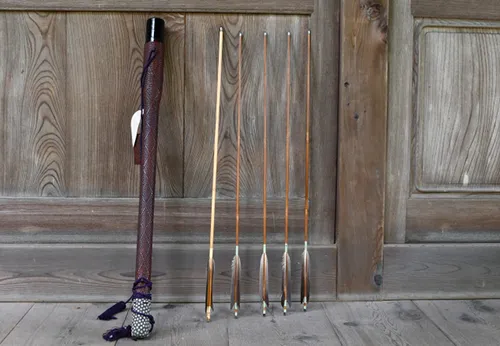
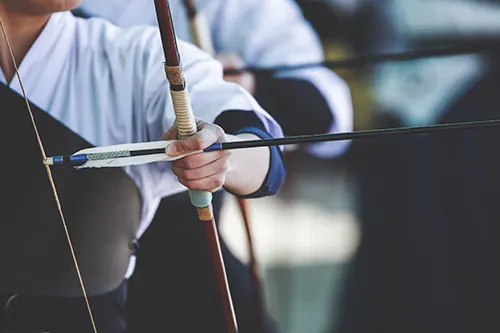
Kyūdō equipment is distinct and deeply connected to its traditions.
The Bow (Yumi)
The Japanese bow is asymmetrical, with the grip positioned below center. It is tall—often longer than the archer—and traditionally made of laminated bamboo and wood. Today, fiberglass bows are also common for beginners.
The Arrows (Ya)
Arrows are made of bamboo, aluminum, or carbon. They are fletched with feathers and come in two types:
- Haya (first arrow)
- Otoya (second arrow)
Their feather patterns typically spiral in opposite directions.
The Glove (Yugake)
A leather glove with a ridge on the thumb that helps control the release. Gloves differ in design depending on experience level.
Additional Gear
- Tsurumaki (string holder)
- Nocking point marker
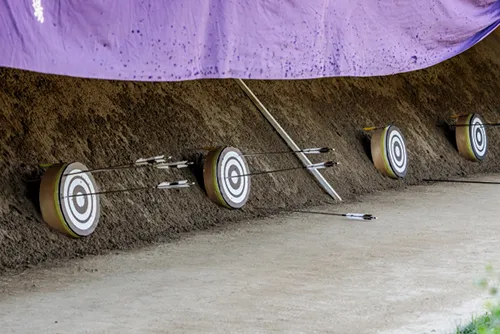
- Target mat and stand
Proper care for equipment is considered part of one’s discipline.
Traditional Clothing
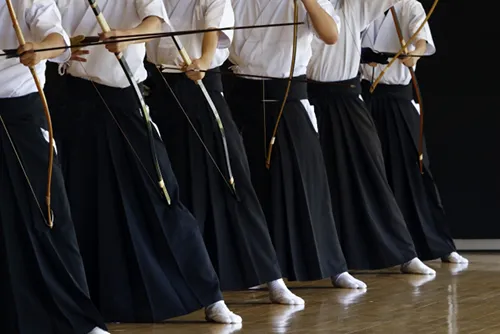
Kyūdō clothing maintains the elegance of classical Japanese attire.
- Hakama (divided skirt-pants)
- Keikogi (practice top)
- Obi (belt)
Women often tie their hakama slightly differently for comfort and stability. Uniforms should be clean and neat, reflecting respect for the dōjō and fellow practitioners.
The Spirit of Kyūdō
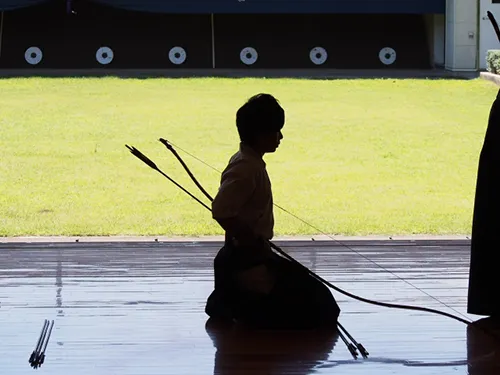
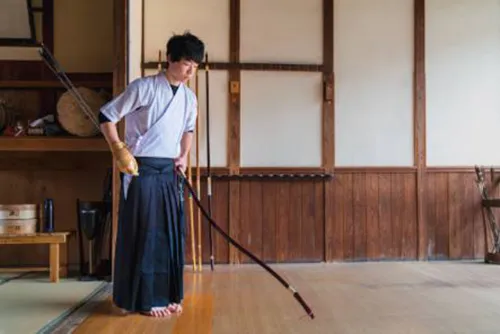
Unlike sports focused solely on accuracy, kyūdō emphasizes spiritual growth. Practitioners aim to cultivate:
- Calmness and self-control
- Awareness of one’s surroundings
- Consistency between intention and action
- Harmony between body and mind
A central idea is “seisha seichū”—“correct shooting leads to a correct hit.” The philosophy suggests that hitting the target is the natural result of proper form and mental clarity, rather than force or ambition.
Kyūdō is therefore a path toward self-reflection. The bow becomes a mirror that reflects an archer’s emotional state. Impatience, fear, or pride often reveal themselves in the shot.
Where Kyūdō Is Practiced

Kyūdō can be found across Japan in:
- High school and university clubs
- Municipal sports centers
- Cultural centers
- Dedicated kyūdō dōjō
Many regions maintain outdoor ranges and spacious indoor halls. Some shrines and temples also host ceremonial shooting events and seasonal tournaments.
Outside Japan, kyūdō is practiced in more than 30 countries through various national federations.
Kyūdō Classes for Foreigners
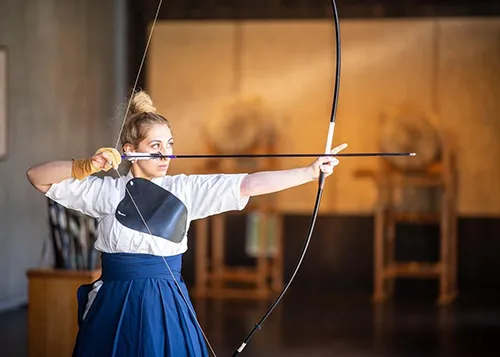
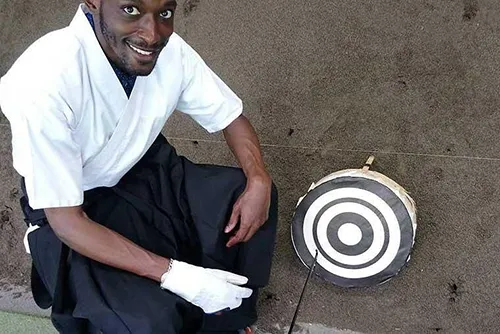
Several locations in major Japanese cities offer beginner-friendly classes specifically for international residents and visitors. These programs usually provide English guidance and rental equipment.
Common places offering foreigner-accessible lessons include:
- Community cultural centers in Tokyo, Osaka, Kyoto, and Fukuoka
- University-affiliated clubs that welcome international students
- Private dōjō that host introductory workshops
- Occasional short-term “experience courses” for travelers
While details vary by region, beginners can typically join monthly classes or take one-day trial sessions. Most programs emphasize etiquette and safety during initial training.

Why People Love Kyūdō
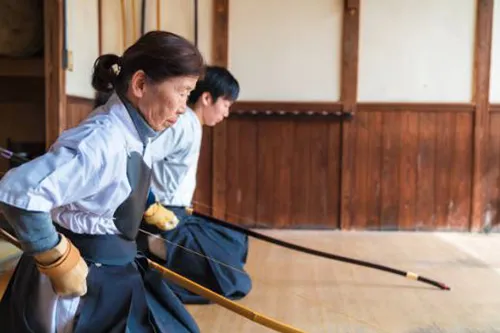
Kyūdō attracts practitioners for many reasons:
- The peaceful environment: Training halls are quiet and meditative.
- Elegance of movement: Every gesture is meaningful and refined.
- Accessible to all ages: Many practice well into their 70s or 80s.
- Cultural depth: It offers insight into Japanese aesthetics and values.
- Personal challenge: Progress depends on discipline, patience, and honesty.
Even a single accurate shot feels deeply rewarding because it requires harmony of body, technique, and emotion.
The Challenges of Kyūdō
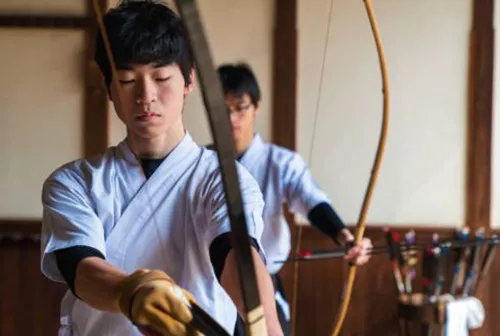
Kyūdō can be difficult, both technically and mentally.
- The bow is powerful and requires gradual conditioning.
- Mastering the hassetsu takes time and detailed correction.
- Progress often feels slow for beginners.
- The mental aspect is demanding—distractions easily affect the shot.
But these challenges are also what make kyūdō a lifelong practice. Many experienced archers say the discipline becomes more profound with each passing year.
Kyūdō in Modern Life
Despite changes in society, kyūdō continues to thrive because it offers something rare: a quiet space to reconnect with oneself. Schools teach kyūdō to encourage focus, balance, and perseverance. Adults practice after work to unwind or cultivate mindfulness. Competitions are held nationwide, from small local tournaments to large annual events.
Kyūdō balances tradition and modernity, allowing practitioners to experience an ancient art that still feels remarkably relevant.
Summary
Kyūdō is far more than archery—it is a disciplined art rooted in centuries of Japanese history and culture. Its elegance, quiet strength, and spiritual depth attract people of all ages and backgrounds. From its techniques and clothing to its etiquette and philosophy, every aspect of kyūdō encourages practitioners to refine not only their aim but themselves. Whether you are living in Japan or simply exploring its traditions, kyūdō offers a unique and meaningful path into the heart of Japanese culture.
Thank you for reading!
Reference Links : All Nippon Kyudo Federation
Hands-On Japanese Cultural Experience