Congratulations on your pregnancy or new baby!
After giving birth, you’ll be busy taking care of your newborn while also needing to complete several procedures at your local city or ward office—and sometimes with your employer as well. Some of these procedures have strict deadlines, so it’s important to know what to do and when to do it.
For many foreign residents, it can feel confusing or overwhelming to figure out which documents are required and what steps must be completed after childbirth.
In this guide, I’ll explain the essential post-birth procedures in Japan as clearly as possible, helping you navigate everything smoothly and with confidence.
What to do first (in the hospital / immediately after birth)
When your baby is born you will receive a few key documents from the delivery hospital or clinic. Keep these safe — they are needed for almost every next step.
What hospitals commonly provide:
- Notification of Birth (出生届用の「出生証明書」/ a doctor’s filled birth certificate form).
- A “Notice of Birth” (sometimes called a hospital-issued document you submit with the municipal birth notification).
- A stamped receipt or “certificate” that confirms the hospital accepted the birth notice for you.
- A Mother and Child Health Handbook (母子健康手帳 / boshi techo) if you did not receive it earlier in pregnancy; normally it is issued by the municipal health office during pregnancy but the hospital will remind you if you still need it.
Bring these documents with you when you go to the city/ward office to register the birth. Many municipal web pages and international resident pages emphasize the hospital’s birth certificate and the mother-child handbook as primary requirements.
1) Register the birth at city / ward office (Notification of Birth — 出生届)
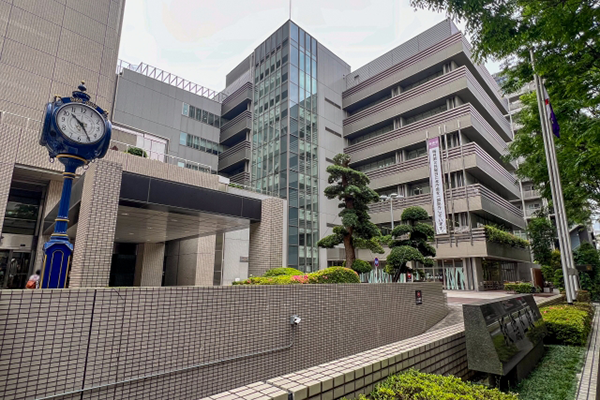
What to do
- Where: Your local municipal office (city/ward/town hall) — the same municipality in which the parent(s) is registered as a resident.
- When: Within 14 days of the birth. If you miss this deadline, contact the municipal office immediately for guidance.
Documents to bring
- The hospital’s birth certificate / doctor’s medical certificate (issued at the hospital).
- Mother and Child Health Handbook (boshi techo) (if available).
- Parent IDs: Residence Card (在留カード), passport, My Number notification or card (if available), and personal seal (inkan) if you use one.
- If the parents are not married, additional steps/forms may be required (ask your ward office for the correct form).
Why this matters
- This legal registration creates the official Japanese record of birth (used for residency documents, school, local child services, and other benefits). For families where one or both parents are foreign nationals, the municipal registration is also the basis for immigration residence procedures.
Tips
- Bring copies of everything and have the original documents. Many municipal offices will want to retain copies.
- Ask for the “Acceptance of Birth Registration” (出生届受理証明書 / shussei todoke juri shomeisho) if you need to use the registered birth record to apply for residence status or embassy registration — this short certificate is often required for other administrative steps.
2) Residence status and immigration matters (for babies of foreign nationals)


What to do
- If either parent is a foreign national, apply for the child’s residence status (status of residence / 在留資格) at the immigration office if you plan the child to reside in Japan. If you are non-Japanese but your child automatically acquires your national citizenship, also check with your country’s embassy for consular birth registration and passport application. Municipalities often require the birth registration acceptance certificate when you apply.
Reference: In the Case of Matsudo City
Important points
- Embassy registration: Register the birth at your national embassy if you want the child recognized by your home country and to process a passport or consular birth certificate. Embassy rules vary; contact them early.
- Timing: Do the municipal registration first (within 14 days), then start immigration/embassy paperwork as soon as you have the acceptance certificate. Immigration offices may require that the municipal registration is completed before they issue or change the child’s residence status.
3) Add the newborn to health insurance and apply for the lump-sum childbirth grant
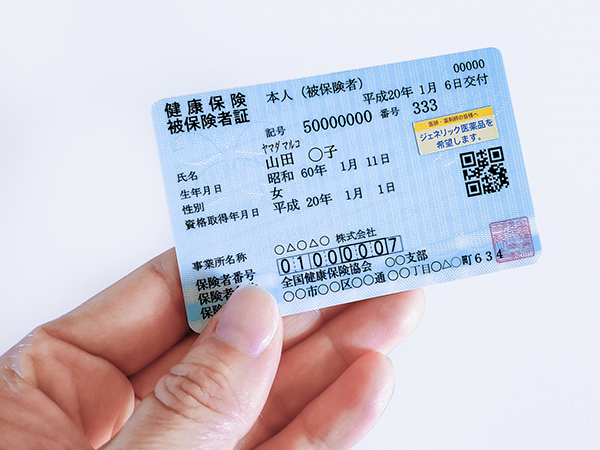
Health insurance
- Add the baby as a dependent under the insured parent’s health insurance plan (either the employer’s health insurance society or the National Health Insurance you pay via the municipality). Some insurers accept notification after birth but treat the baby’s coverage as beginning from the date of birth if documents arrive promptly — still, submit the paperwork as soon as possible to avoid confusion. Typical insurer guidance and procedures vary, so contact your insurer directly for exact forms and deadlines. If you are employed, consult your company’s HR department or labor and social security attorney (sharōshi) for assistance.
Lump-sum childbirth and childcare grant (出産育児一時金)
- If you or your spouse are enrolled in public health insurance, you may be eligible for a lump-sum childbirth allowance (shussan ikuji ichijikin) to help cover delivery costs. This benefit is normally processed through your health insurance provider, and many hospitals can handle the claim for you.
In most cases, hospitals use the Direct Payment System (直接支払制度), where the lump-sum benefit is paid directly from the insurer to the hospital. This means you do not have to pay the full delivery cost upfront. You will only need to pay any amount that exceeds the benefit.
If your hospital does not use the direct payment system, you will pay the delivery fees yourself first and then submit the claim to your health insurance provider afterward. Check with your insurer and the hospital’s billing desk in advance to confirm whether the direct payment option is available.
(In 2025, the lump-sum childbirth and childcare grant is 500,000 yen per child.)
Documents to bring
- Birth certificate from hospital, health insurance card of the insured parent, copy of the baby’s birth notification receipt (if you have it), and any forms your insurer requests.
→Learn more about Japan’s Health Insurance System
4) Apply for Child Benefit (児童手当)

What it is
- A recurring benefit for families with children who meet the eligibility conditions. It’s administered by local municipalities; eligible households must apply to receive it.
| Child’s Age / Birth Order | Monthly Allowance (per child) |
|---|---|
| Under 3 years old (0–2) | ¥15,000 |
| Age 3 up to high-school age (1st or 2nd child) | ¥10,000 |
| 3rd child or later (up to eligibility age) | ¥30,000 |
When to apply
- Apply after you register the birth (municipal offices normally accept applications immediately). Payments are usually made six times a year, with benefits for the previous two months paid together in even-numbered months. Check your municipal office for exact payment dates and local rules.
Documents commonly required
- Application form (available at the ward/municipal office), a copy of the parent’s health insurance card, bank account details (for bank transfer), personal ID (residence card), and sometimes the birth certificate/municipal acceptance of birth registration.
Tips for foreign residents
- Municipalities usually require a residence registration (住民票) before issuing the allowance. Ensure your family is correctly registered and your residence status is up to date.
5) Child medical subsidies and local health services

What it is
- Many municipalities offer subsidies or partial coverage for pediatric care (for example, certain age-limited free or reduced-cost doctor visits and prescriptions). Eligibility, coverage ages, and procedures differ by municipality.
How to proceed
- Ask at the municipal health or child welfare desk after registering the birth. You will usually be given a pamphlet or card explaining local subsidies and how to use them for doctor visits and vaccinations.
→Learn more about Child Medical Expense Subsidy Program
6) Vaccinations and the Mother and Child Health Handbook

- Use the Mother and Child Health Handbook (boshi techo) to record newborn care, vaccinations, developmental milestones, and medical visits. Local public health centers schedule and inform parents about the national immunization schedule (e.g., hepatitis B, BCG, DPT/DTaP, Hib, polio, measles/mumps, etc.) and provide notices for recommended vaccinations. Keep this handbook with you at medical visits.
→Learn more about the Maternal and Child Health Handbook and Vaccinations
7) Maternity leave, childcare leave, and benefits for working parents

Maternity leave (産前産後休業)
- Mothers employed under labor laws are eligible for prenatal and postpartum leave (usually 6 weeks before the expected date and 8 weeks after birth in many cases; confirm with employer and health insurer). Maternity leave pay varies depending on social insurance and employer policies.
Childcare leave (育児休業 / ikuji kyūgyō)
- Both parents may be eligible for childcare leave under Japan’s employment insurance system. Apply in writing to your employer (requirements often include a written application at least two weeks before the leave start date; company-level rules may require earlier notice). The childcare leave benefit is paid under Employment Insurance and amounts depend on previous salary; benefits are generally paid every two months and can last up to one year (longer in specific circumstances).
→Click here for information on maternity and childcare leave in Japan.
Birth / paternity leave for fathers
- There is also a short paternity leave (or leave for childcare at birth) option for fathers to support immediate postpartum care. Specific entitlements and benefit rates vary; check with your company’s HR and the MHLW booklet.
Steps to claim benefits
- Notify your employer in writing of the leave schedule (follow any company-specific forms).
- Obtain required certificates: your employer typically issues a certificate of employment, salary, and leave for the Employment Insurance office or Hello Work.
- Submit the Employment Insurance application for childcare leave benefits to Hello Work or through employer HR. Deadlines and supporting documents vary, so collect pay slips, the medical certificate if required, and the leave application form.
Tips for freelancers and non-employed parents
- Freelancers may not be eligible for Employment Insurance childcare benefits unless they have voluntarily enrolled. Check consultation services at municipal child support centers for available subsidies and local support. Non-working parents should still register for local child benefits and health insurance coverage for the child.
→Learn more about Maternity and Childcare Leave in Japan
8) My Number (マイナンバー) Setup for Your Baby
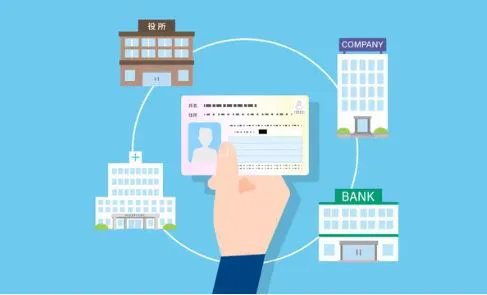
After submitting the birth registration, your baby is automatically assigned a My Number. Normally, a My Number notification letter is mailed to your home, but many municipalities also offer a “priority issuance” service, allowing parents to apply at the same time as the birth registration and receive the My Number card in about one week. Ask your municipal office if this fast-track option is available.
Your baby’s My Number is required for procedures such as health insurance enrollment, medical subsidy applications, and future benefit programs. Since the exact handling and follow-up steps vary by municipality, confirm with the office how your baby’s My Number will be issued and whether any additional steps are necessary.
Learn more about My Number here
9) Practical checklist — what to do in the first 1–3 months
- Day 0–14: Register the birth at the municipal office (shussei todoke). Obtain acceptance certificate.
- Week 1–4: Add baby to health insurance and apply for lump-sum childbirth payment (if applicable).
- Week 2–8: Apply for child benefit at municipal office; ask about local medical subsidies.
- Weeks 0–12: Arrange maternity/childcare leave notifications to employer and submit any Employment Insurance applications. Collect employer certificates and pay records for benefits.
- Month 1–3: Embassy registration and passport application if you want the child to have your national passport; start immigration residence status process if needed.
| Procedure | Deadline | Required Documents |
|---|---|---|
| Birth Registration | Within 14 days after birth | Maternal and Child Health Handbook, Birth Certificate, etc. |
| Child Benefit Application | By the end of the birth month | Income certificate, Bank account information |
| Health Insurance Card Issuance | Within 1 month after birth | Application form, Resident record, etc. |
| Lump-sum Birth and Childcare Benefit Application | Soon after being discharged from the hospital | Receipt, Health insurance card, etc. |
10) Special notes for foreign nationals
- Embassy vs. municipal registration: Municipal registration (shussei todoke) is required for local legal recognition and most Japanese benefits. Embassy registration is separate and required if you want your child recognized for citizenship or passport in your home country. Many embassies require a copy of the municipal acceptance certificate and the hospital certificate — keep extra copies.
- Documents to prepare: passport, valid residence card, marriage certificate (if required by your home country to establish parentage), and translations where the embassy or immigration office requests them.
- Timing: Complete the municipal registration first (within 14 days) — some immigration change-of-status paperwork cannot proceed until the municipality issues the acceptance certificate.
- Language support: large city ward offices often provide English or multilingual support desks or interpreters. If you need help, ask your municipal international resident services or local NPOs that help foreign residents.
11) Common pitfalls and how to avoid them
- Missing the 14-day birth registration window — set a phone reminder as soon as you leave the hospital. If you miss it, contact the ward office immediately.
- Assuming the hospital filed everything for you — hospitals issue certificates but do not usually complete municipal registration unless you explicitly arrange it. Bring documents to the ward office yourself.
- Delaying health insurance enrollment — submit the child-dependents form promptly to avoid confusion at the clinic or hospital when the child needs care. Some insurers backdate coverage if notified promptly, but practices vary.
- Not collecting the Birth Registration Acceptance Certificate — if you will apply for an embassy or change immigration documents, you will likely need this certificate, so request it at the municipal office.
12) Father’s Support

These procedures can be completed by either the father or the mother. If possible, the father should handle the paperwork to help the mother recover after childbirth. If that is difficult, consider sharing the tasks between both parents or asking relatives for support so the process goes smoothly.
13) Where to get help locally
- Municipal international resident desk, municipal child and family services desk, or public health center.
- Employer HR — for forms related to maternity/paternity/childcare leave and Employment Insurance benefit applications.
- Your health insurer — for lump-sum childbirth payments and dependent addition forms.
- Embassy or consulate — for home country passport and nationality registration steps.
- Local non-profit and expat community groups — they often share checklists, sample forms, and translations.
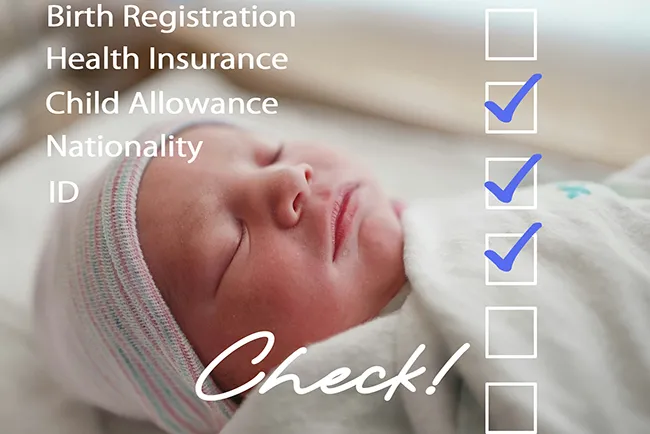
14) Final practical checklist
- Get hospital birth documents and boshi techo.
- Register baby at municipal office within 14 days (get acceptance certificate).
- Add baby to health insurance and apply for lump-sum childbirth grant.
- Apply for Child Benefit at municipal office (jidō teate).
- Apply for local child medical subsidies and note vaccination schedule.
- Notify employer (maternity/childcare leave); submit Employment Insurance benefit applications with employer’s certificate.
- Embassy registration / passport for baby if desired.
Please treat this guide as a practical companion — municipal details and employer policies vary, so use the checklist and the order of actions above as your roadmap.
15) Procedures You Can Usually Complete on the Same Day at the Local Municipal Office

- Submit the Birth Notification (shussei todoke)
Once submitted, your baby’s residency record is created and family registry information is updated. - Apply for the Child Benefit (Jidō Teate)
In many municipalities, you can apply right after submitting the birth notification, often at the same child-support or welfare counter. - Apply for the Child Medical Expense Subsidy
This is frequently handled by the same department as the Child Benefit.
It’s common to complete: Birth Notification → Child Benefit → Medical Subsidy all on the same day. - Add Your Baby to National Health Insurance (if your household is enrolled in NHI)
If the family is on National Health Insurance (NHI), you can usually complete this on the same day in the same building.
※ If you are covered by employee health insurance (shakai hoken), this must be done through your employer, not the municipal office. - Apply for Priority Issuance of Your Baby’s My Number Card (if available)
Some municipalities offer a fast-track My Number issuance service, which can be applied for at the same time as the birth registration.
With this option, the My Number card is normally ready in about one week.
Availability and details vary by municipality, so ask at the counter when submitting the birth notification.
16) Procedures That Cannot Be Done on the Same Day at the Local Municipal Office
- Adding Your Baby as a Dependent Under Employer Health Insurance
This must be done through your company’s HR department or a labor and social security attorney (sharōshi)—not at the municipal office. - Procedures Requiring the Family Registry Update to Be Completed First
Examples include applying for a passport or obtaining certain official certificates.
These may not be available on the same day the birth notification is submitted.
A Common Same-Day Workflow Example
Birth Notification → Child Benefit → Child Medical Subsidy → National Health Insurance (if applicable)
This sequence is the most typical and allows you to complete the majority of post-birth procedures at the municipal office in a single visit.
Conclusion

Navigating post-birth procedures in Japan can feel overwhelming, especially when you’re balancing newborn care, little sleep, and life changes. But once you understand the flow, most tasks are straightforward—and many can be completed in one visit to the municipal office. Don’t hesitate to lean on your partner, family, or friends, and take things one step at a time. Japan’s systems are designed to support new parents, and completing these procedures early will give you more peace of mind so you can focus on what truly matters: enjoying precious time with your new baby.
Thank you for reading.
Create Memories with Your Kids